

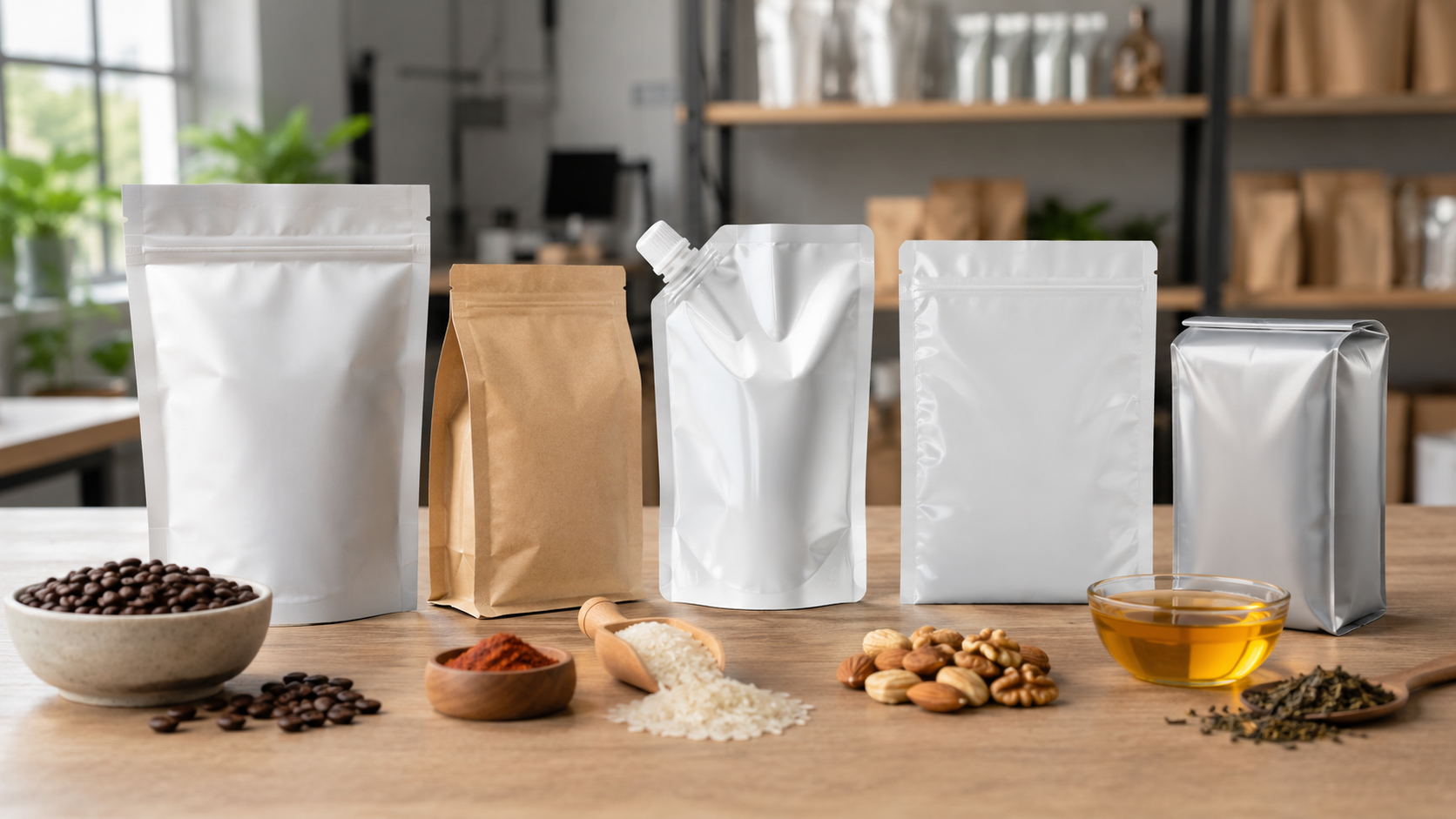
Choosing the right flexible packaging pouch is essential for protecting your product, improving shelf appeal and creating a better customer experience. The ideal pouch should match the product type, filling process, storage conditions and expected shelf life.
Market Snapshot
Flexible packaging is increasingly preferred by food, FMCG, agricultural and industrial brands because it is lightweight, space-efficient and suitable for customised printing.
In 2026, buyers are focusing on high-barrier performance, recyclable structures, strong seals and packaging formats that reduce transportation and storage costs.
Why Buyers Are Choosing This Packaging Solution
Different products require different pouch formats.
Stand-Up Pouches
A stand-up pouch is suitable for snacks, spices, dry fruits, coffee, grains and refill products. It offers excellent shelf visibility and can include features such as zippers, tear notches and transparent windows.
Flat-Bottom and Quad-Seal Pouches
These formats are commonly used for rice, coffee, pet food, flour and heavier products. Their stable structure provides additional strength and more printable space for branding.
Spout pouches are ideal for sauces, oils, beverages, liquid detergents and semi-liquid products. They offer controlled pouring, easy storage and convenient reclosure.
Investment Potential
The right pouch can reduce product leakage, spoilage, transportation damage and packaging waste.
While evaluating custom pouch packaging, buyers should consider the total packed-product cost, including material usage, filling speed, rejection rates, secondary packaging and product returns.
A slightly higher-quality pouch may provide better long-term value by improving product protection and reducing avoidable losses.
Lifestyle Advantages
Modern consumers prefer packaging that is convenient, portable and easy to use.
Features such as resealable zippers, handles, tear notches and spouts can improve:
- Product freshness after opening
- Clean and controlled dispensing
- Household storage
- Portion management
- Consumer convenience
For food packaging pouches, convenience features should always be balanced with moisture, oxygen, aroma and light protection.
What This Means for Buyers
Before selecting a pouch, packaging buyers should clearly define:
- Product type and fill quantity
- Required shelf life
- Moisture and oxygen sensitivity
- Filling temperature and machinery
- Storage and transportation conditions
- Printing and branding requirements
- Applicable food-contact or packaging regulations
Buyers should also request tests for seal strength, bond strength, oxygen transmission, moisture transmission and puncture resistance.
Supporting materials such as BOPP packaging film, PET, CPP, polyethylene and aluminium foil may be combined depending on the required barrier and sealing performance.
Asian Flexi Pack offers multiple pouch formats, advanced printing, lamination and pouch-making capabilities for food, FMCG, agriculture and industrial applications.
The right flexible packaging pouch is not simply the most attractive option. It is the pouch that protects the product, performs efficiently during filling and delivers a convenient experience to the customer.
Frequently Asked Questions
Which pouch is best for dry food products?
Stand-up, flat-bottom and three-side-seal pouches are commonly used for snacks, spices, grains, pulses and dry fruits. The final choice depends on product weight and shelf-life requirements.
What information is needed for a pouch quotation?
Buyers should provide the product type, fill weight, pouch dimensions, quantity, material preference, printing requirements and filling process.
How does high-barrier packaging improve shelf life?
High-barrier packaging reduces the movement of oxygen, moisture, aroma and light through the pouch, helping maintain freshness and product quality.
Can flexible pouches be customised?
Yes. Pouches can be customised with different sizes, printing, finishes, windows, zippers, handles, spouts and barrier structures.
Why should filled-pouch testing be conducted?
Filled-pouch testing helps confirm seal strength, leakage resistance, transportation durability and actual shelf-life performance.