
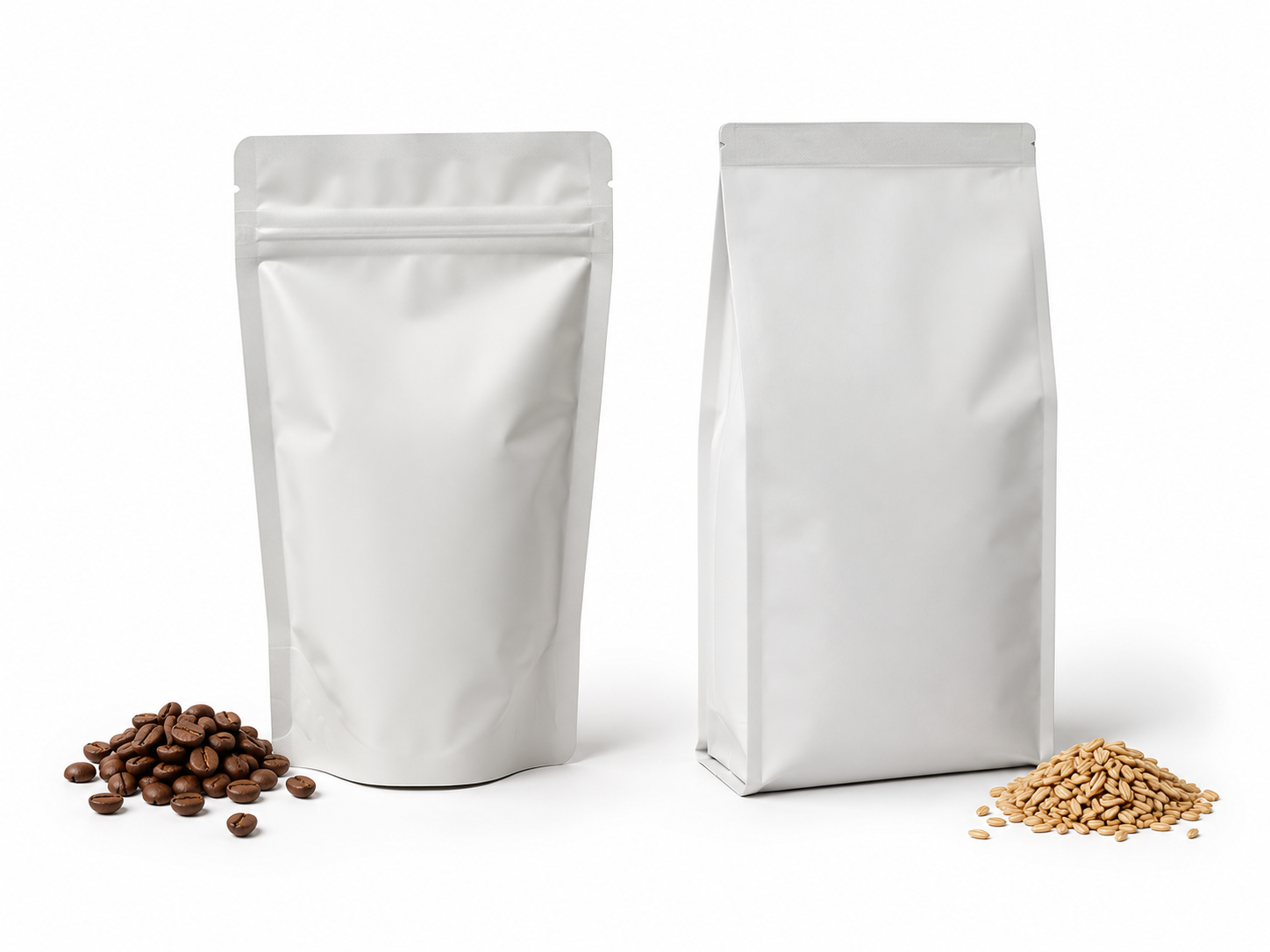
Choosing between a stand-up pouch vs flat-bottom pouch depends on the product, fill weight, shelf presentation and customer convenience. Both formats provide strong branding opportunities, but their structure and applications are different.
Industry Overview
Flexible pouches are widely used for snacks, coffee, rice, spices, pet food, dry fruits and other FMCG products. Brands prefer these formats because they are lightweight, customisable and easier to transport than many rigid containers.
Why Brands Choose Stand-Up Pouches
Flexible and Cost-Effective Packaging
Stand-up pouch packaging uses a bottom gusset that allows the pouch to stand upright. It is commonly used for snacks, spices, coffee, dry fruits and refill products.
It can be customised with:
- Resealable zippers
- Tear notches
- Transparent windows
- Handles
- Matte or glossy finishes
Stand-up pouches are suitable for brands looking for attractive and practical retail packaging.
Why Brands Choose Flat-Bottom Pouches
Premium Stability and More Branding Space
Flat-bottom pouch packaging features a stable rectangular base with front, back, side and bottom printing panels.
It is commonly selected for:
- Coffee
- Rice and grains
- Pet food
- Flour
- Premium food products
Its box-style structure offers improved shelf stability and additional space for branding and product information.
Packaging Investment Potential
Stand-up pouches are often suitable for cost-conscious, high-volume retail applications. Flat-bottom pouches may require a higher investment but can support premium positioning and stronger shelf presentation.
The final decision should consider packaging cost, filling efficiency, transportation safety and product protection.
Consumer Convenience Advantages
A resealable pouch helps consumers store products after opening and maintain freshness for longer.
Both pouch formats can include user-friendly features, but flat-bottom pouches provide better stability for heavier products, while stand-up pouches offer flexibility across multiple product categories.
What This Means for Buyers
When comparing a stand-up pouch vs flat-bottom pouch, buyers should evaluate:
- Product weight
- Pack size
- Shelf-life requirements
- Filling machinery
- Storage conditions
- Branding space
- Closure requirements
- Transportation conditions
A professional flexible packaging supplier can recommend the right structure based on product performance and commercial requirements.
Frequently Asked Questions
Which pouch is better for snacks?
Stand-up pouches are commonly preferred for snacks because they provide strong shelf visibility and can include resealable zippers.
Are flat-bottom pouches suitable for heavy products?
Yes. Their stable base makes them suitable for rice, flour, coffee, pet food and other heavier products.
Which pouch offers more printing space?
Flat-bottom pouches offer more printable panels, including front, back, sides and bottom.
Can both pouch formats include transparent windows?
Yes. Both formats can be customised with transparent windows, depending on product barrier requirements.
Which pouch is more affordable?
Stand-up pouches are generally more economical, but the final cost depends on size, material, printing and order quantity.